

Unfortunately, the same can’t be said for most SEO myths. At best, they’re slightly misleading. At worst, they lead you to waste precious time, money, and resources on things that will never improve SEO.
So let’s bust a few common SEO myths once and for all.
- SEO is dead
- SEO is a one-time thing
- Google only ranks ‘fresh’ content
- Long-tail keywords are easier to rank for
- Duplicate content will get you penalized
- Social signals help rankings
- PPC can’t help you rank higher
- PageRank doesn’t matter anymore
- SEO is all about rankings
- Keyword research isn’t important
Perhaps this one is more straight nonsense than a myth, but it’s worth putting to bed nonetheless.
Lazy journalism likes to proclaim many things dead regularly, and SEO is no different. According to Ahrefs’ Content Explorer, this phrase has been uttered 3,367 times since June 2016.
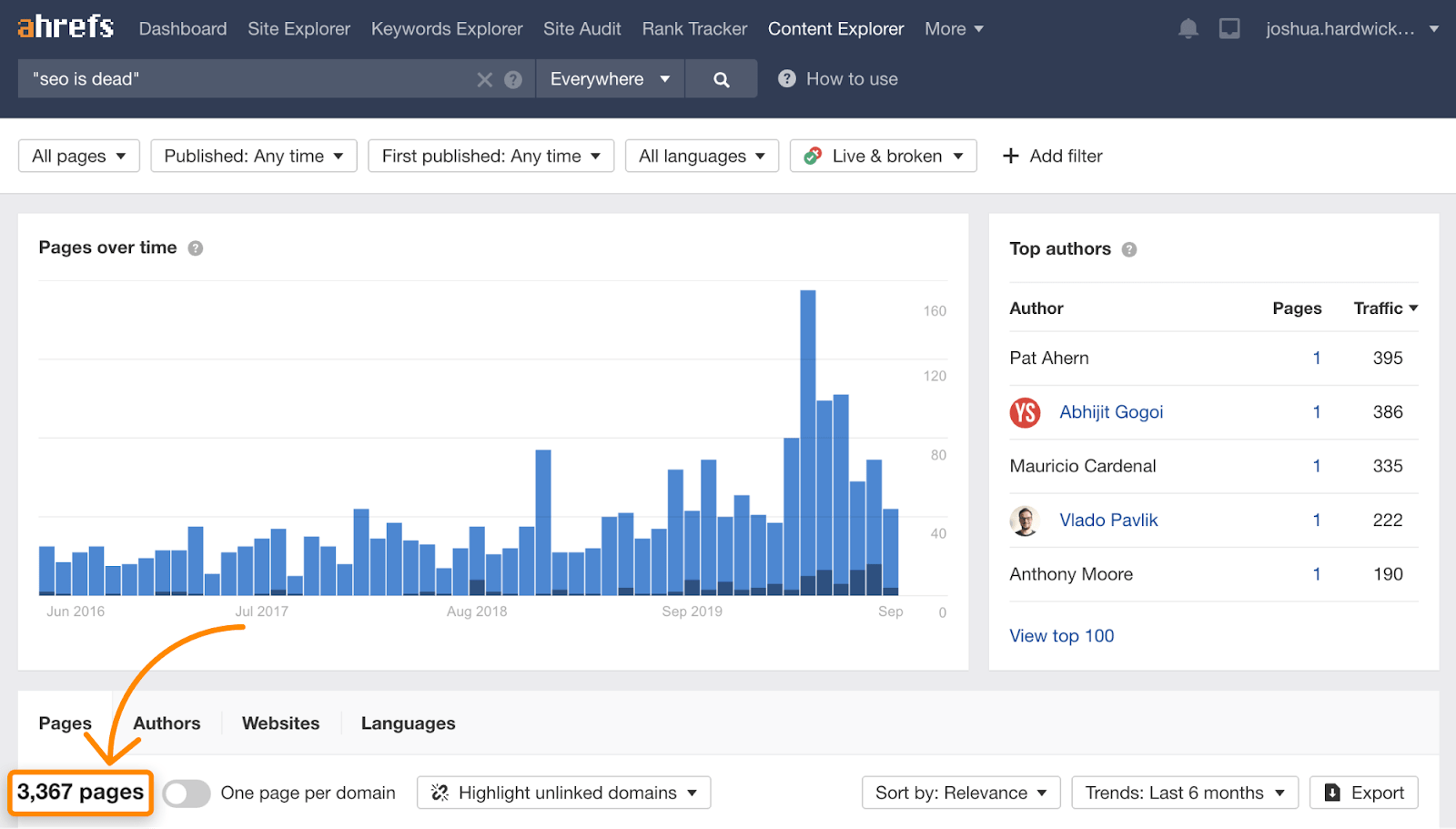
On average, that’s 66 times a month.
So let’s set the record straight once and for all:
SEO. Is. Not. Dead.
How do we know? Well, here’s the organic search traffic to our blog over the past three months:
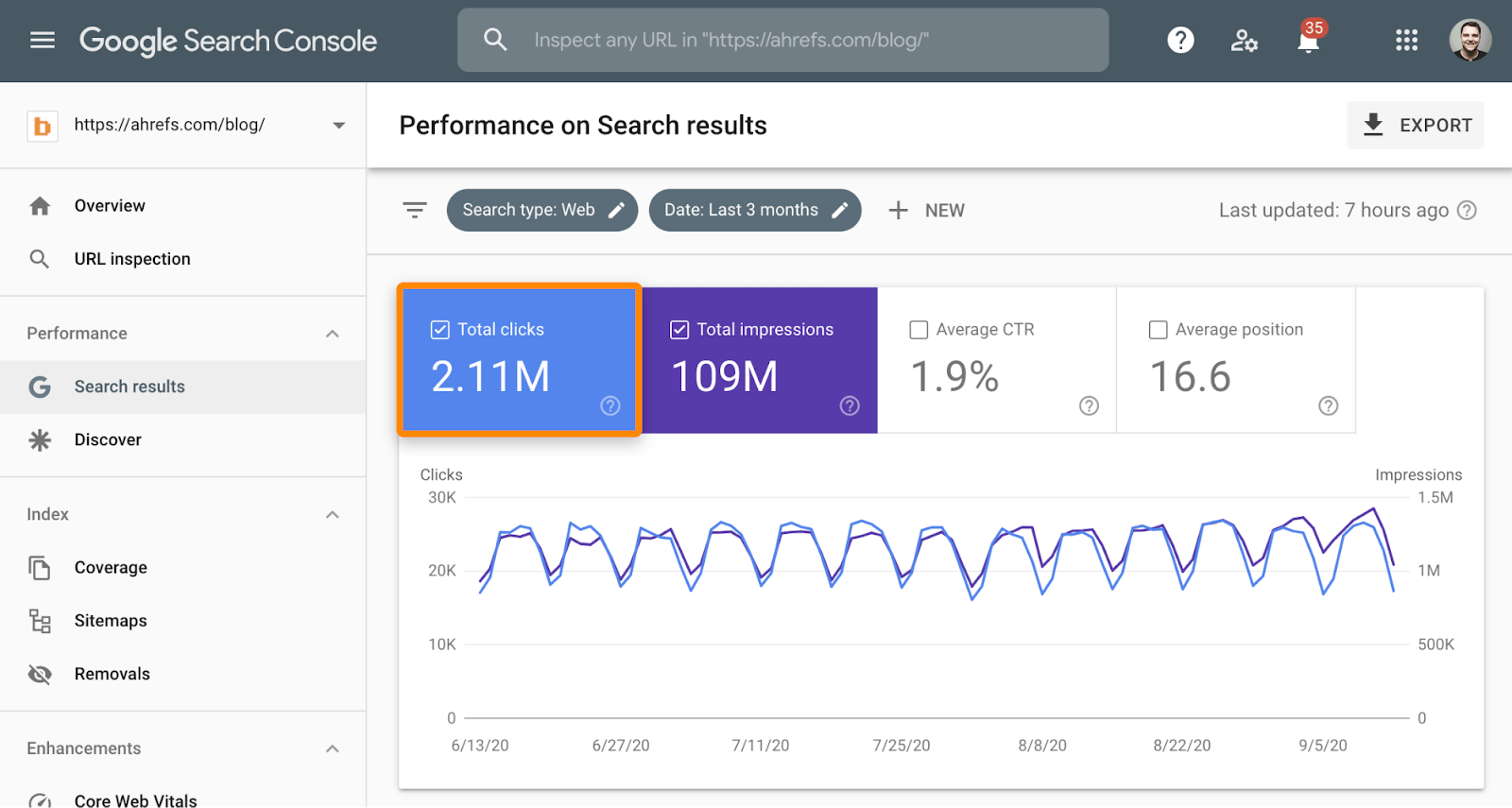
2.1 million visits… all from “SEO.”
So why do people keep saying SEO is dead?
There are all kinds of reasons, but the most prominent argument these days relates to the increasing prevalence of answers in search results like this:
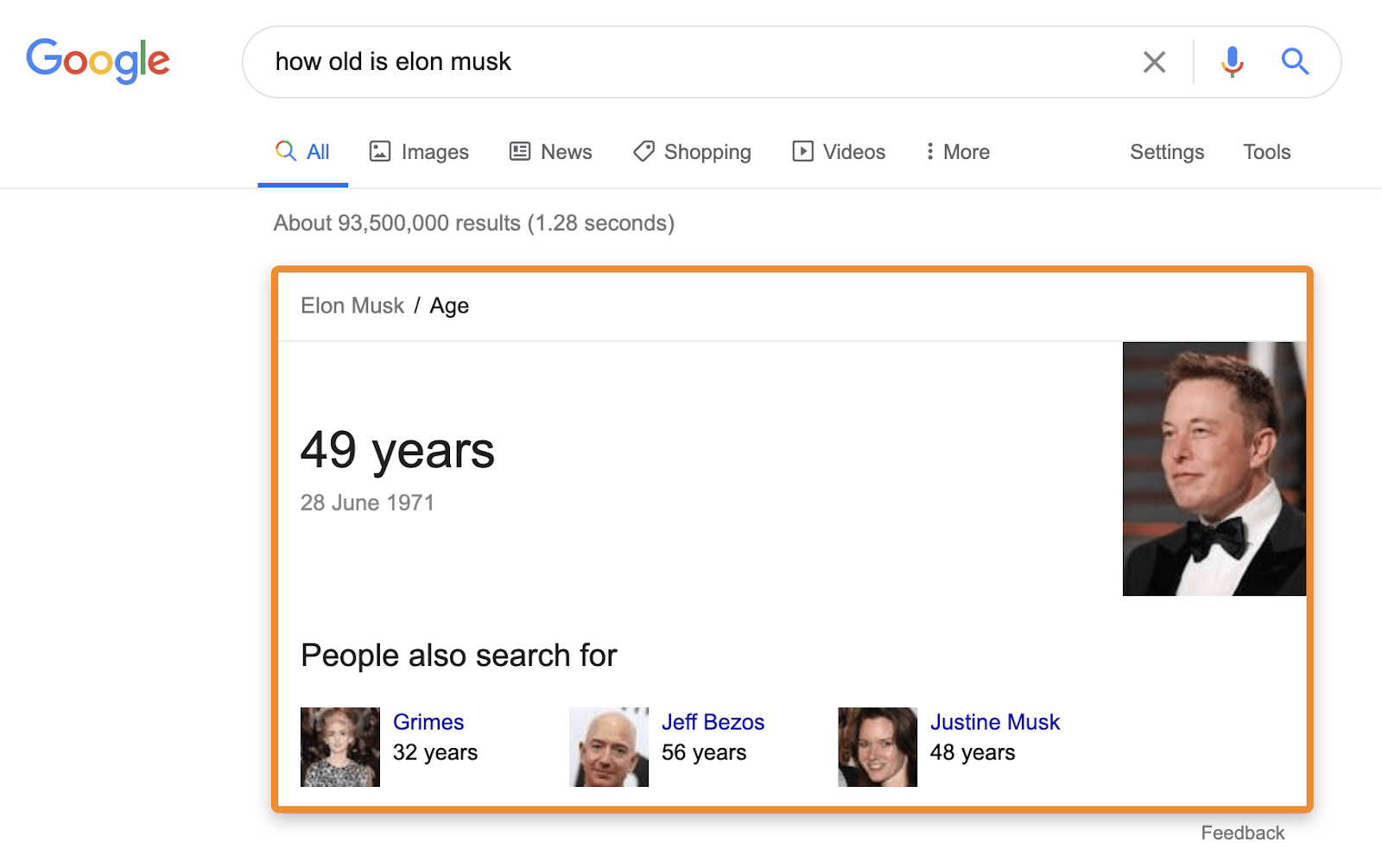
Does this negatively impact the number of clicks on search results? Of course. If we look at this query in Ahrefs’ Keywords Explorer, we see only 1,200 clicks from an estimated monthly search volume of 14,000. That means people click only 8% of the time.
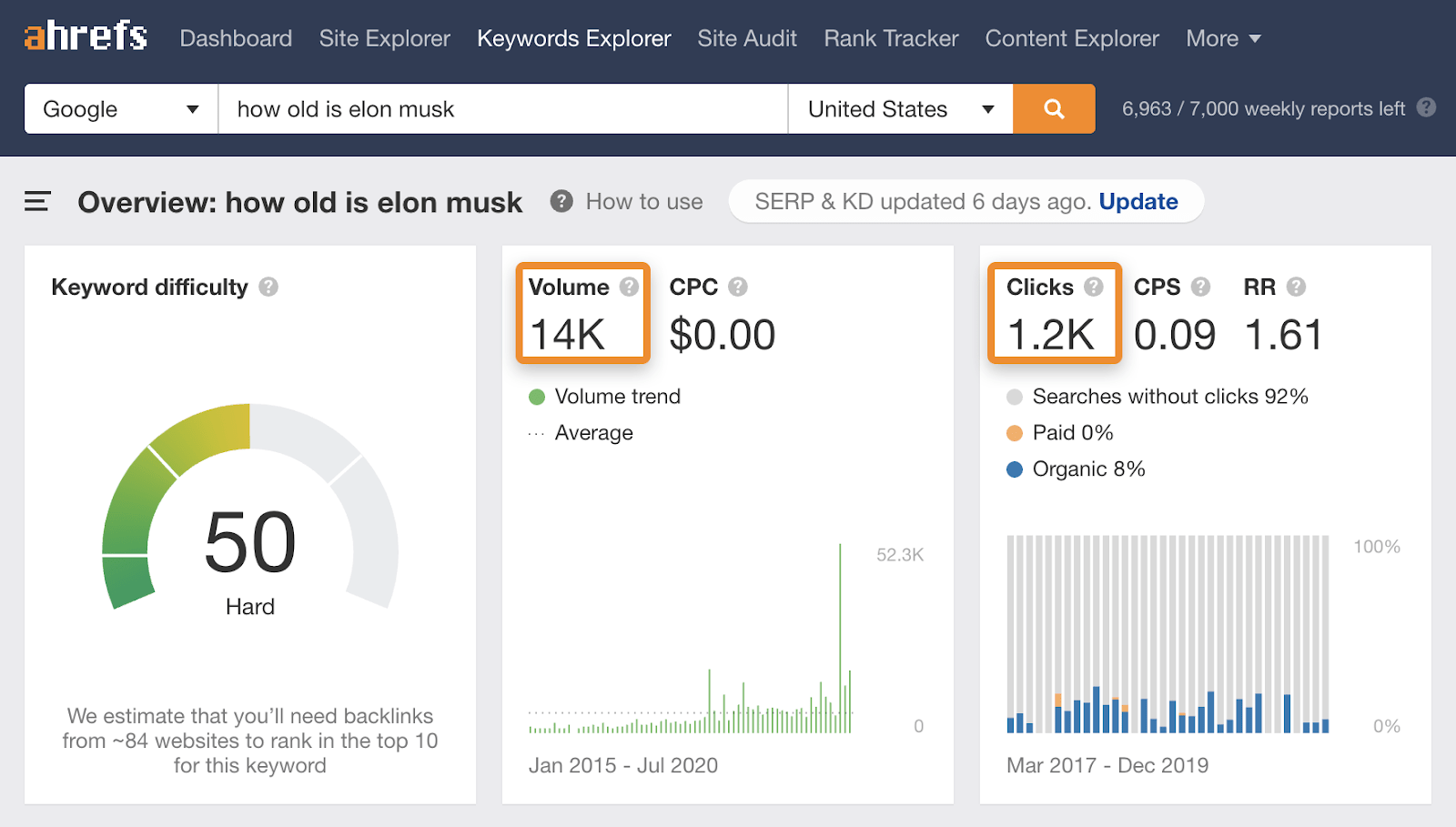
But this doesn’t mean SEO is dead. You can still get clicks from this keyword, and Google only shows answers in the search results for some keywords anyway.
The truth is that as long as search engines still exist, are used, and show organic results that you can influence in some way, then SEO isn’t dead.
SEO is a bit like going to the gym. It’s okay to miss a workout here and there, but things soon start to fall apart if you stay at home eating chips too often. (Trust me, I know.)
Here’s what it looks like when you start neglecting your SEO:
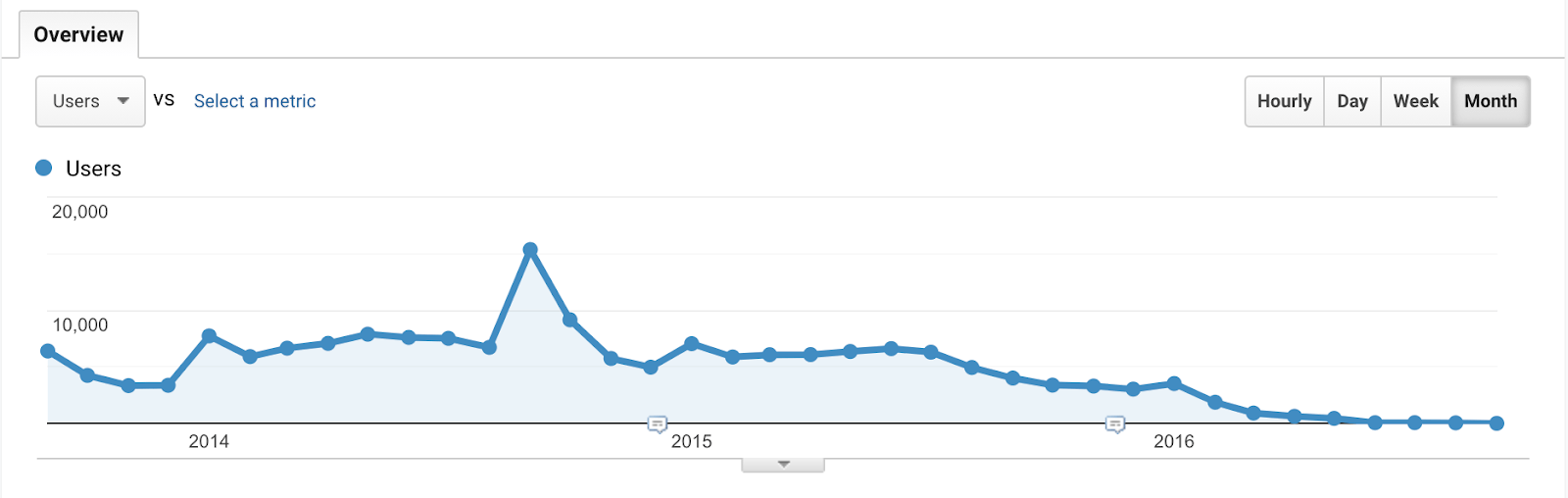
Before this period, I was actively optimizing the site. Then, I neglected it and shifted my attention to other things. You can see that traffic slowly declined over the following months.
There are several reasons this can happen:
- Your competitors overtake you (by consistently working on their SEO).
- You start losing backlinks due to ‘link rot.’
- Your content loses ‘freshness’ (more on this shortly).
That’s why most SEO professionals (74.71%) charge a monthly retainer for their services, rather than an hourly rate or one-time fee. They know SEO is an ongoing process and that their clients need to invest long-term to see results.
Is this true for absolutely all sites? No. There are rare instances where a site can be neglected for years and continue to pull in consistent traffic month after month.
Here’s one example:
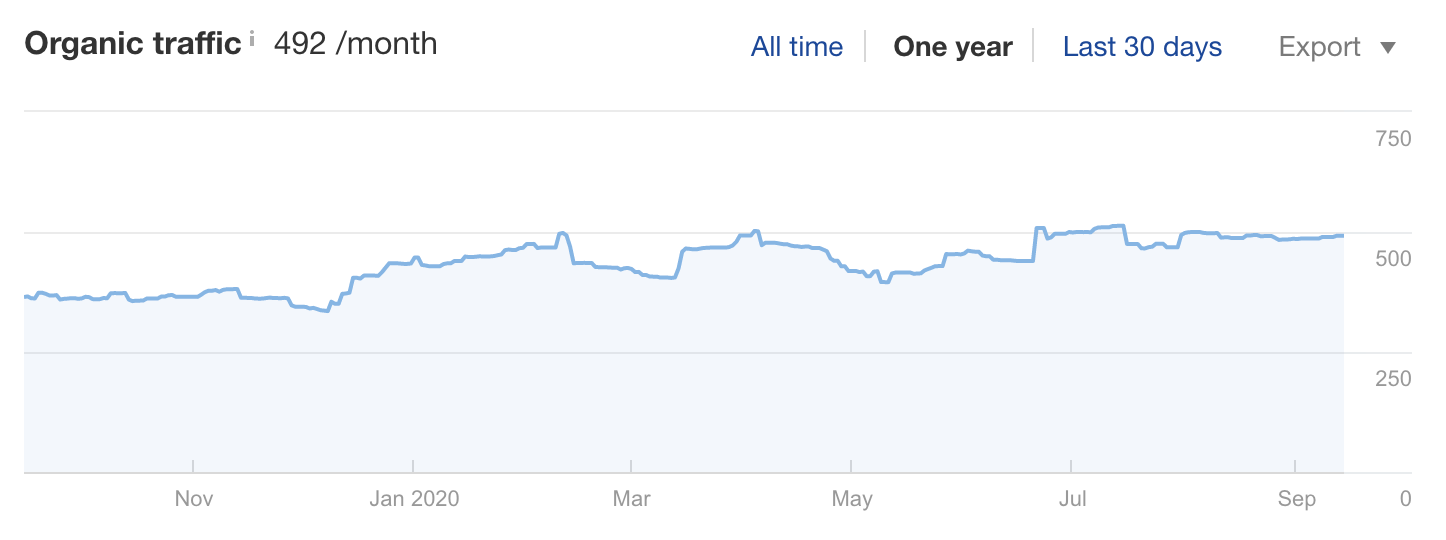
It was last updated in 2011, yet still pulls in an estimated ~500 monthly organic visits.
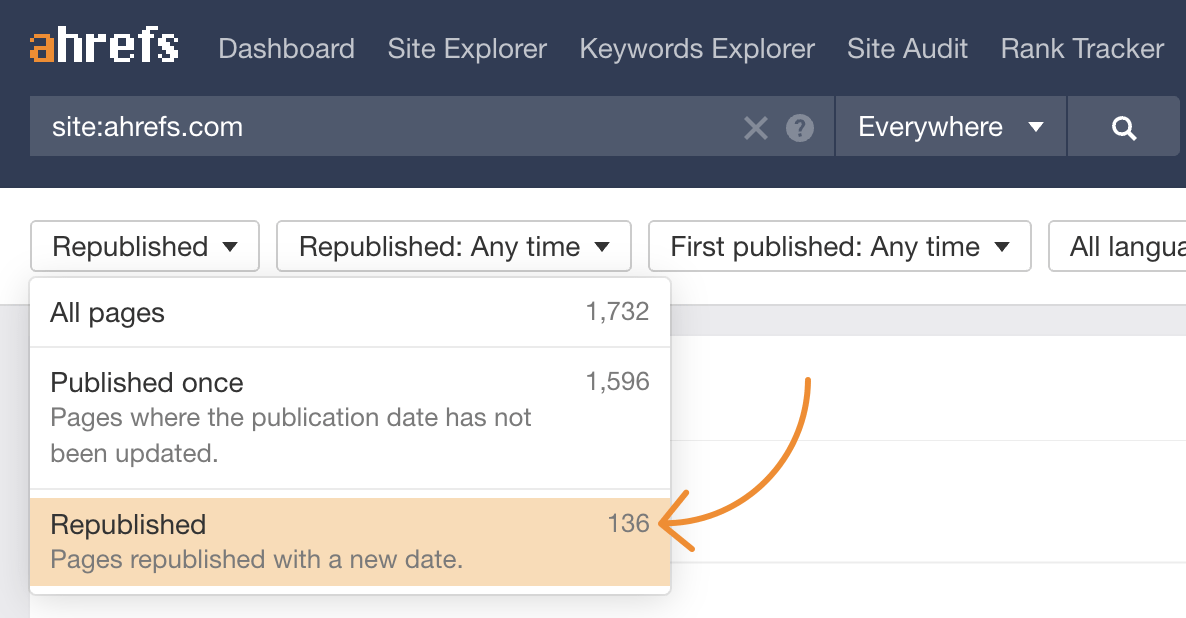
Republishing content is something we do a lot. If we filter for republished posts on the blog in Ahrefs’ Content Explorer, there are 136 since 2016.
So why are we investing so much effort into keeping our content fresh if freshness is a myth?
‘Freshness’ is a query-dependent ranking factor. That means it matters more for some queries than others. It all depends on whether the freshness of the content has any impact on content quality.
SEO is continually evolving, so freshness matters for many SEO-related queries.
For example, here’s what happened when we didn’t update our list of the top Google searches for months:
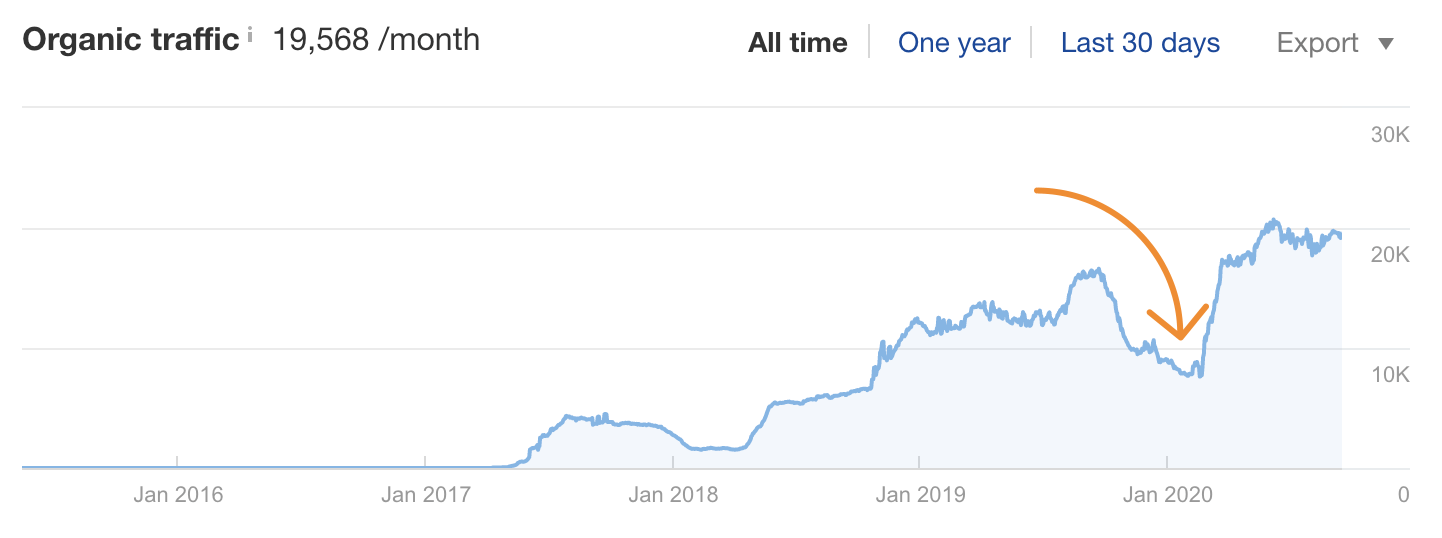
You can see that traffic was declining for months, but then recovered pretty much overnight when we refreshed and republished it. That’s because the top Google searches change all the time, so people expect ‘fresh’ results.
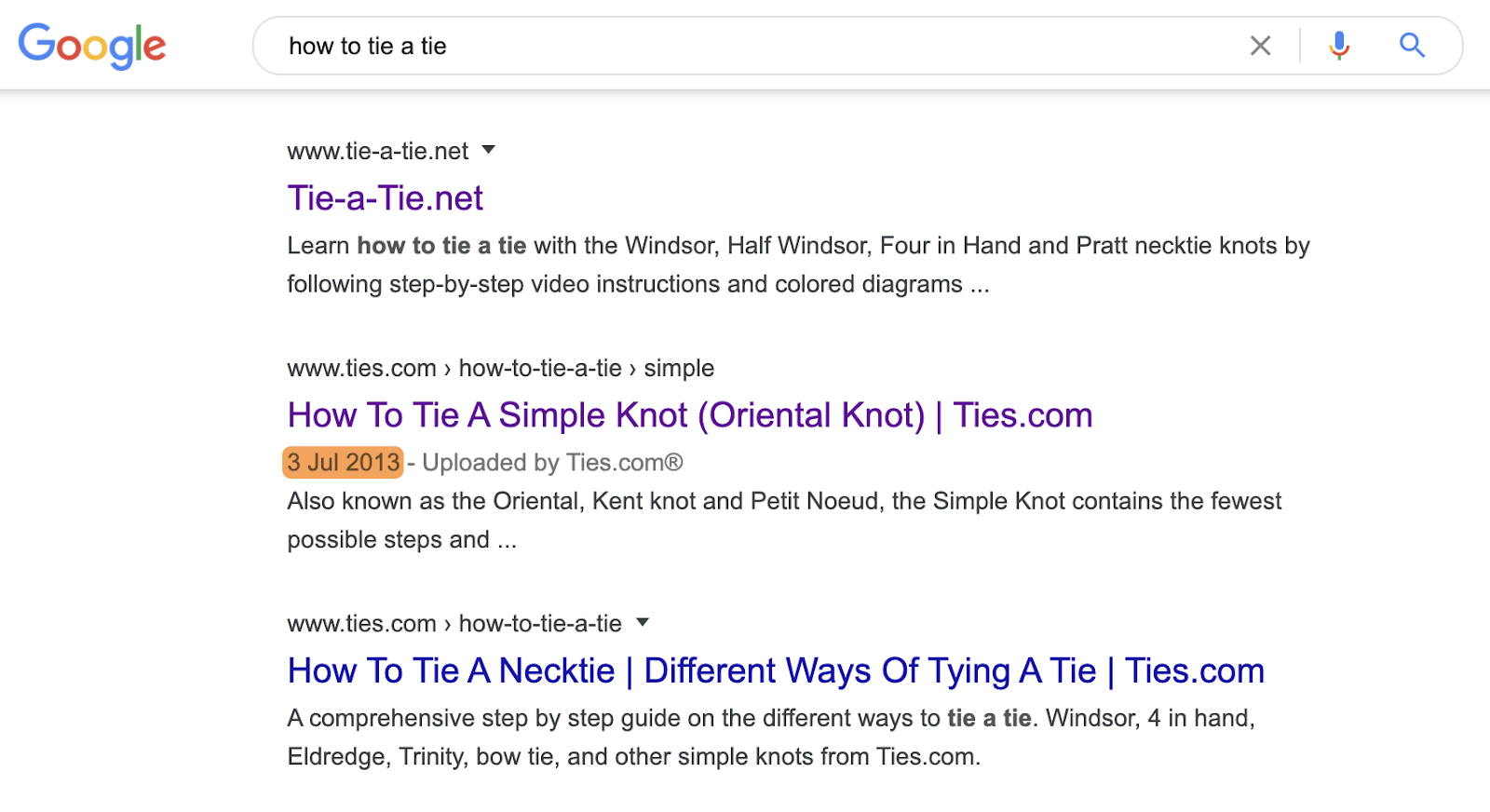
On the flip side, freshness doesn’t particularly matter for a query like “how to tie a tie” because the process never changes. That’s why Google is quite happy to rank pages in the top three that were last updated in 2013.
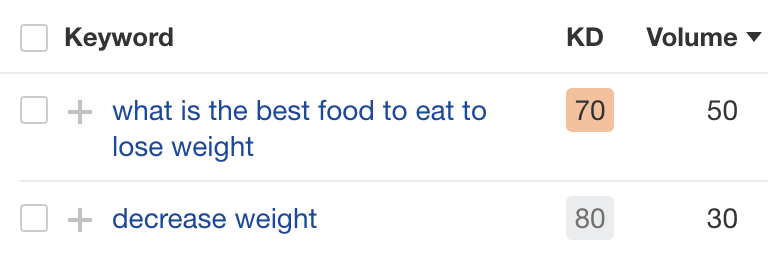
Most people think long-tail keywords consist of many words, but this isn’t entirely accurate. Long-tail keywords are queries with low individual search volumes. The number of words doesn’t matter.
For example, both of these queries are long-tail keywords:
But here’s the thing: even though long-tails get few monthly searches, they’re usually not any easier to rank for than their more popular counterparts.
For example, look at the Keyword Difficulty scores for these keywords:
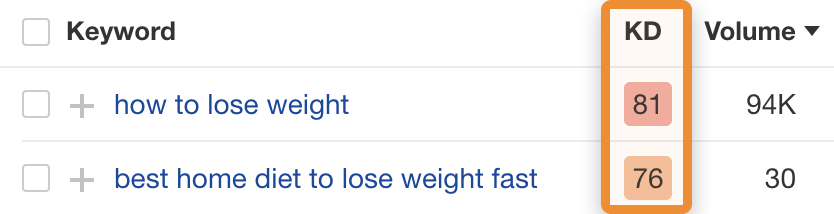
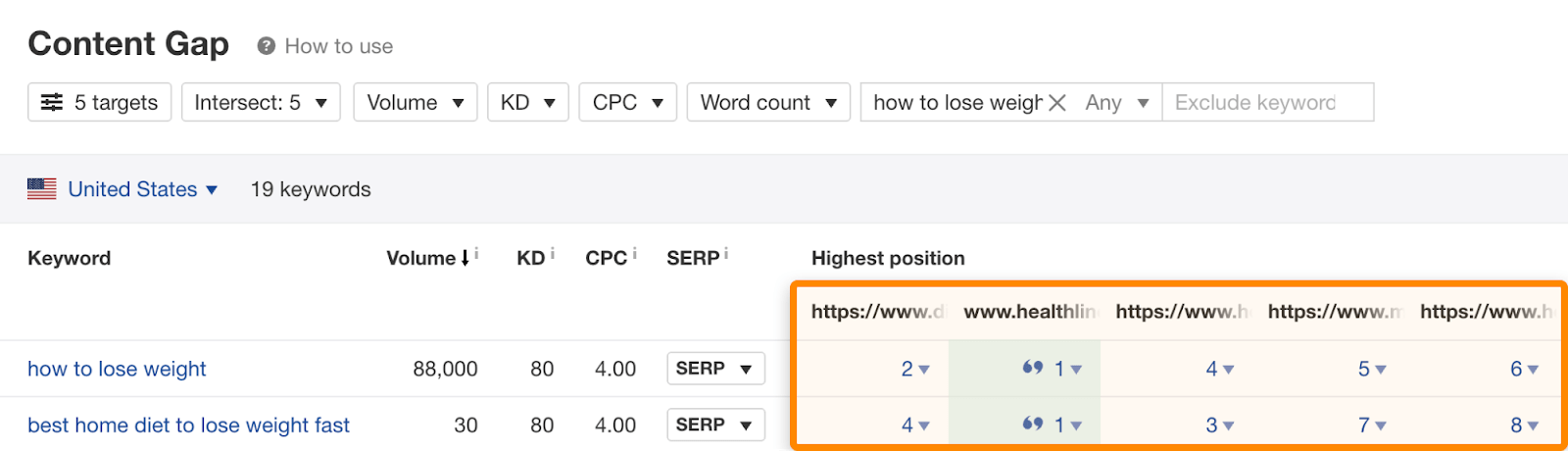
Despite the considerable difference in monthly search volumes, the scores are roughly the same. That’s because the low-volume query is what we like to call a “supporting long-tail keyword.” In other words, it’s a less popular way of searching for a popular topic.
It’s usually not any easier to rank for these long-tails because Google ranks mostly the same set of results as they do for the ‘main’ keyword.
Now, in fairness, there is another type of long-tail keyword that does tend to be easier to rank for. We like to call these “topical long-tails.” You can learn about those in our full guide to long-tail keywords.
Duplicate content is where exact or near-duplicate content shows up in more than one place. It can be on the same website or across multiple sites.
For example, both of these URLs take you to the same blog post:
https://buffer.com/library/social-media-manager-checklist/
https://buffer.com/resources/social-media-manager-checklist/
Google has said there’s no duplicate content penalty on numerous occasions, but this myth still gets peddled to oblivion on the regular.
However, while duplicate content won’t get you penalized, it can cause SEO issues such as:
- Undesirable or unfriendly URLs in search results;
- Backlink dilution;
- Wasted crawl budget;
- Scraped or syndicated content outranking you.
If you’re concerned that you might have duplicate content on your site, run a crawl with Ahrefs’ Site Audit and check the Duplicate content report. If you see clusters of near or exact duplicates, it may be worth fixing the issues.
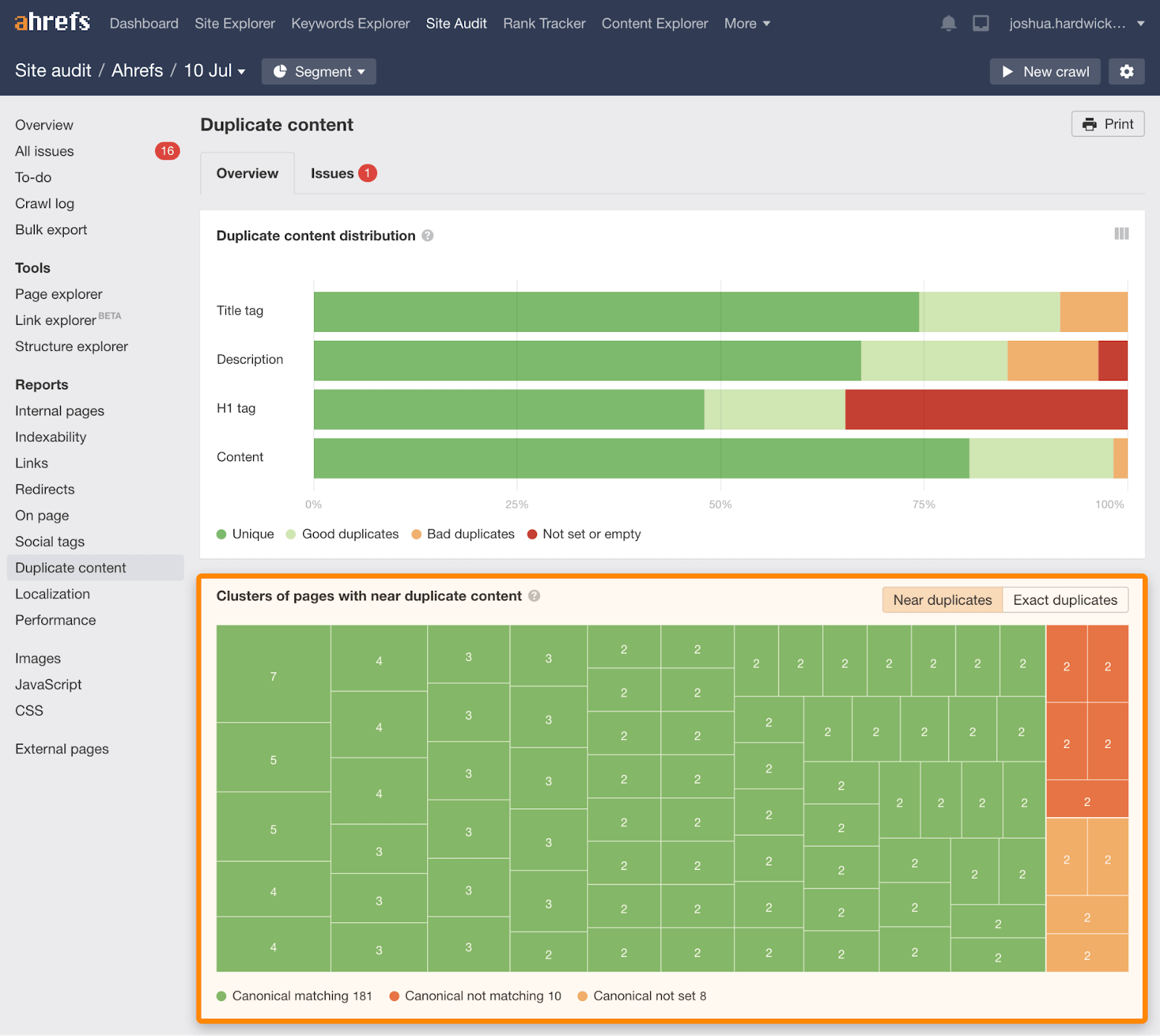
Learn how to do that in our beginner’s guide to duplicate content.
It’s not farfetched to assume that the more your content gets shared on sites like Facebook, Twitter, and Pinterest, the higher it’ll rank. After all, if tons of people share something, it must be interesting and valuable and worthy of ranking, right?
Maybe, but according to Google’s John Mueller, social signals don’t directly impact rankings.
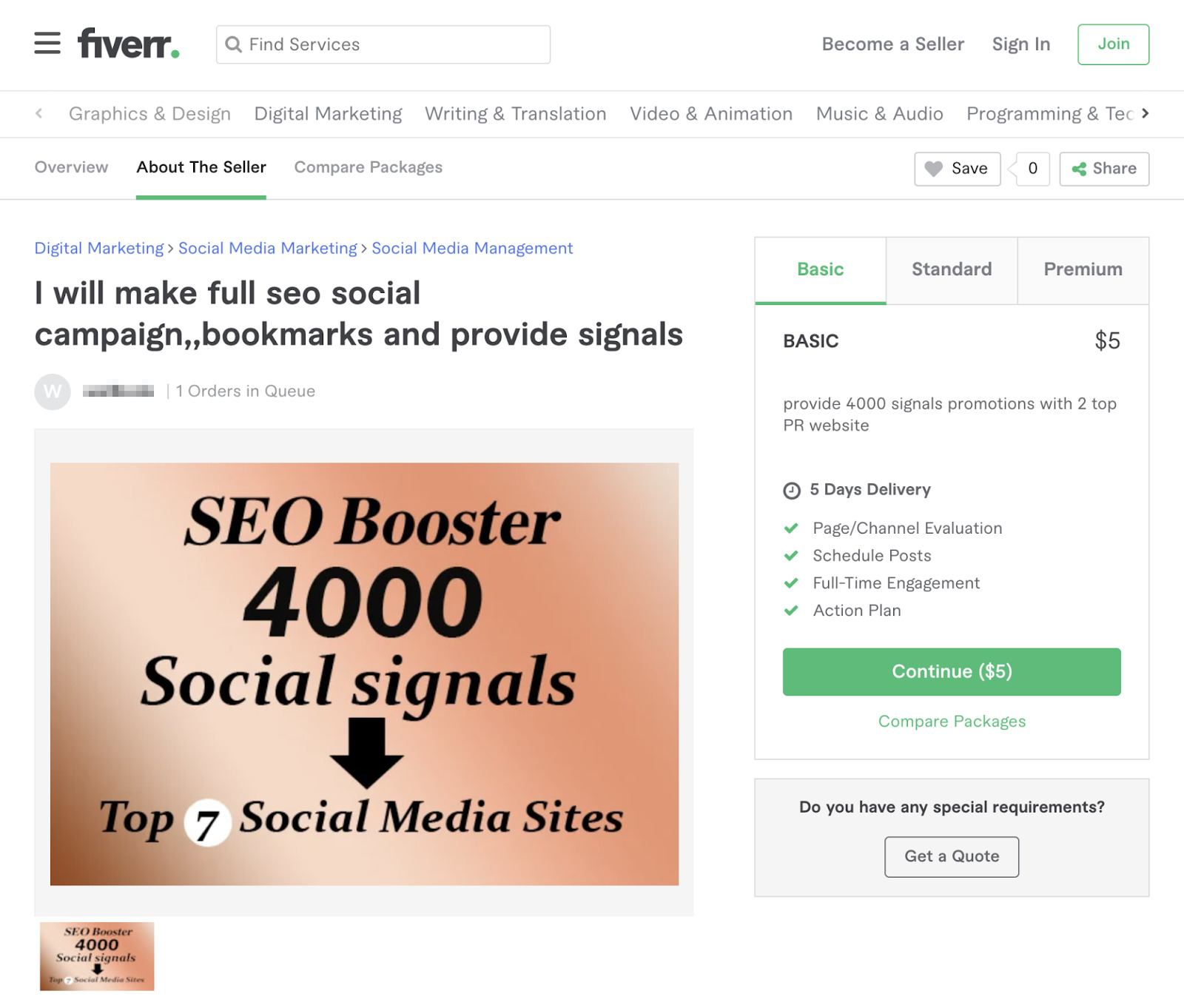
That’s probably because social signals are so stupendously easy to manipulate. Seriously, take a look on Fiverr. You can get thousands of them for a few bucks.
But if this is true, why do many studies show a correlation between social shares and rankings?
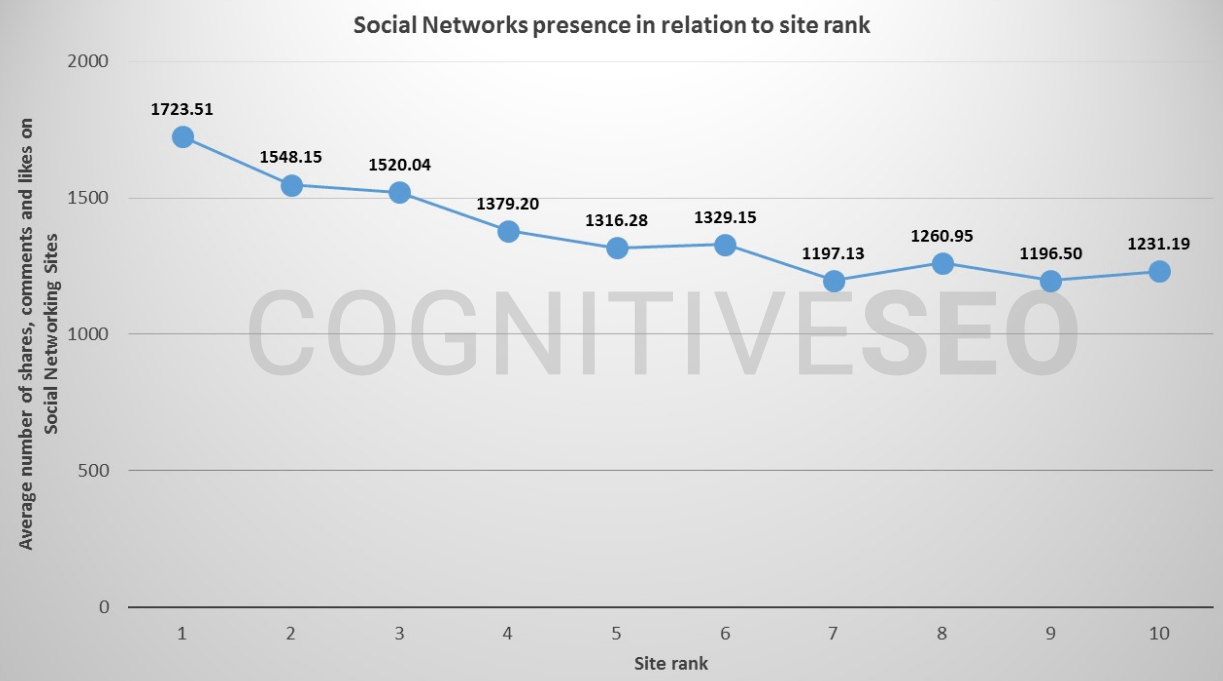
There’s no definitive reason for this, but we think these are the two most significant contributing factors:
- More shares lead to more exposure, and that often leads to more backlinks (which are a ranking factor).
- Pages that rank well in Google get more traffic, and some of those people will share the content on social media.
Let’s be clear: paying Google for ads won’t directly influence rankings. I love conspiracy theories as much as the next person, but Google isn’t going to rank you higher because you’re lining their pockets.
However, that doesn’t mean PPC can’t indirectly help you rank higher.
And that’s because PPC ads can help attract backlinks.
Don’t believe us? We recently spent $1,246 on Google ads with the intention of building links to one of our blog posts. The result? Backlinks from eleven new websites.
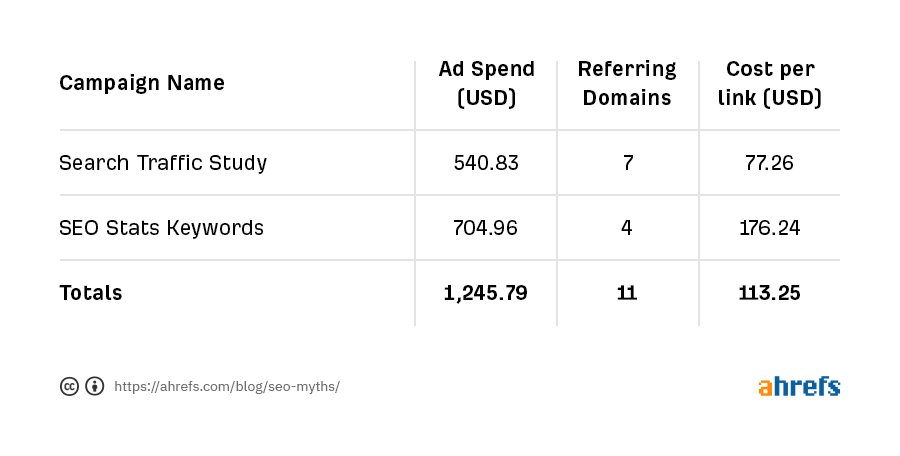
Now, this doesn’t mean you can run any old PPC campaign and watch the backlinks roll in. It needs to be strategic.
Learn how we did it in this video:
PageRank is the foundation of Google. It looks at the quantity and quality of backlinks to judge the value of a page.
Google confirmed that PageRank is still a ranking factor in 2018:
DYK that after 18 years we’re still using PageRank (and 100s of other signals) in ranking?
Wanna know how it works?https://t.co/CfOlxGauGF pic.twitter.com/3YJeNbXLml— Gary 鯨理/경리 Illyes (@methode) February 9, 2017
But ever since Google discontinued public PageRank scores in 2016, some people think that us SEOs shouldn’t be talking about this metric:
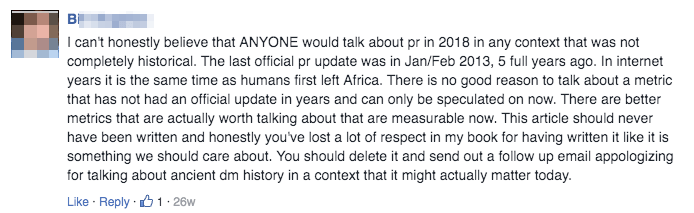
There’s undoubtedly some merit to this argument. After all, there’s little point talking about a metric that we can no longer see. But the fact of the matter is that PageRank is still a ranking signal, which means that getting high-quality links to your web pages still matters.
This is further backed up by the fact that Ahrefs’ URL Rating (UR) correlates nicely with search traffic:
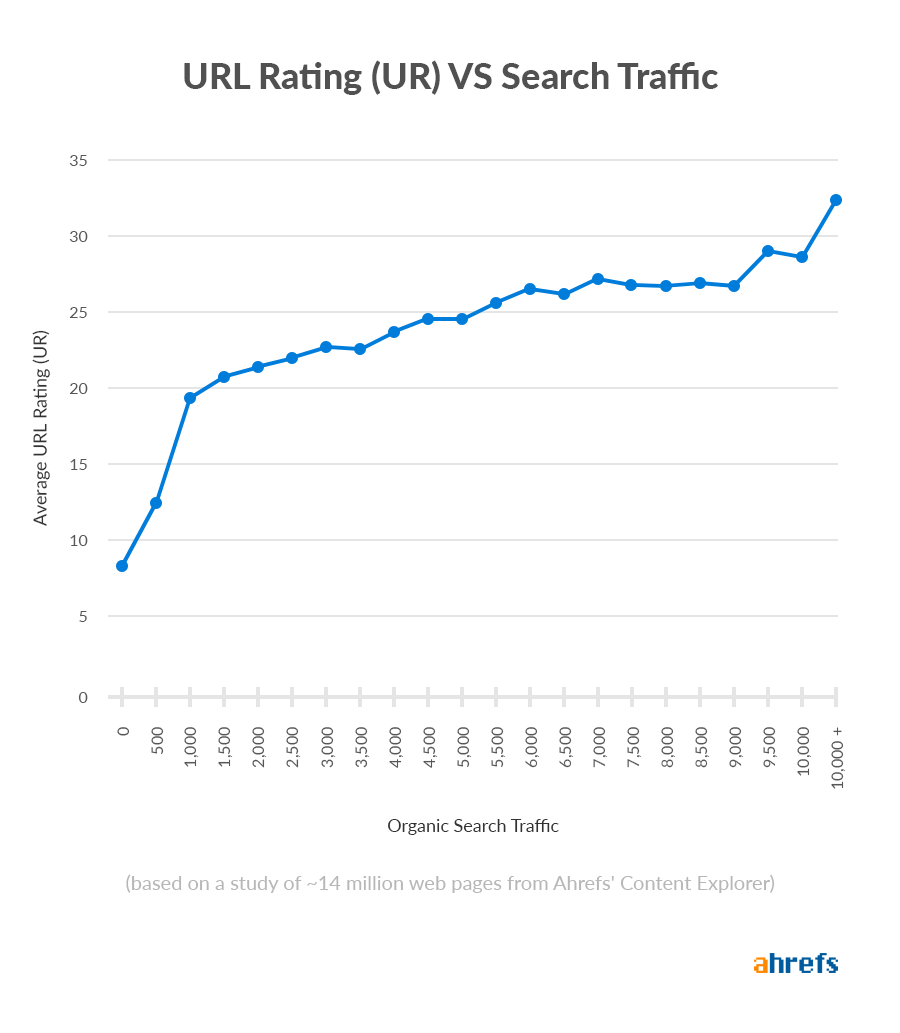
If you’re not familiar with UR, it’s our page-level authority metric that works on similar—but not identical—principles to Google’s original PageRank formula.
Everyone wants to rank number one, but that’s usually because they assume that the number one result gets the most traffic. However, this isn’t always true. Our study of 100,000 search queries shows that the top-ranking page only gets the most search traffic 49% of the time.
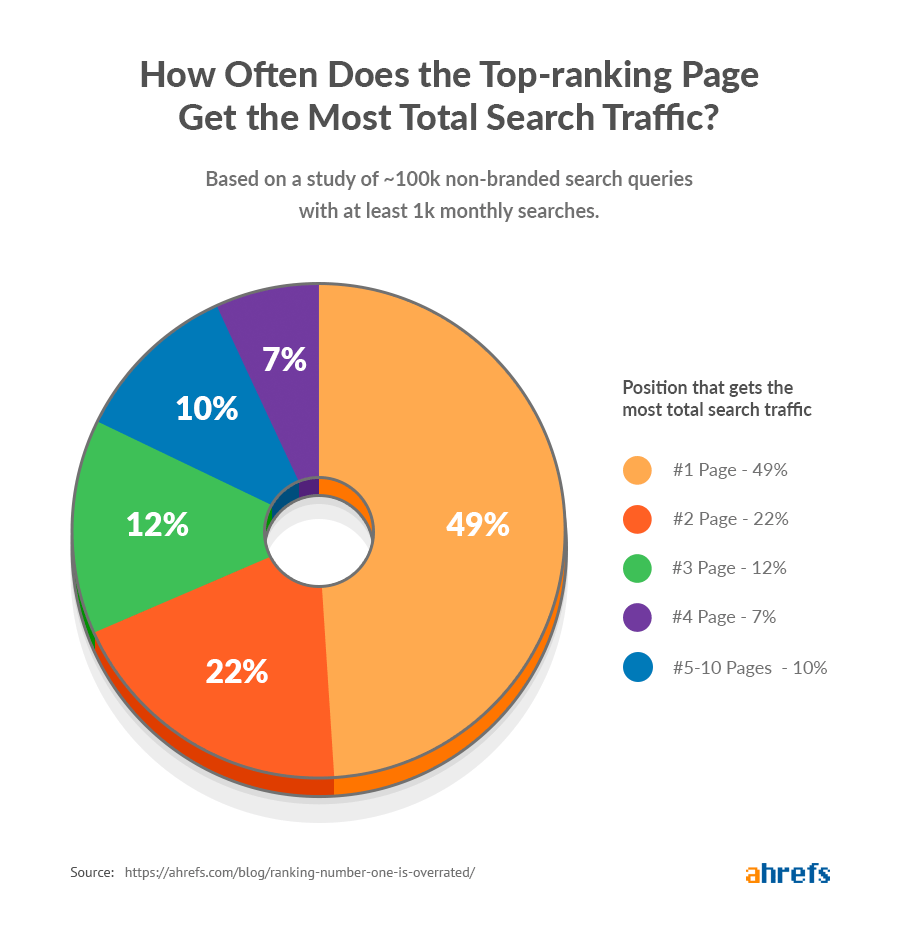
Why? Because most pages get traffic from many keywords, not just one.
For example, look at the top-ranking pages for “high protein diet.” The page in position two gets more estimated traffic than the page in position one because it ranks for more keywords with search demand.
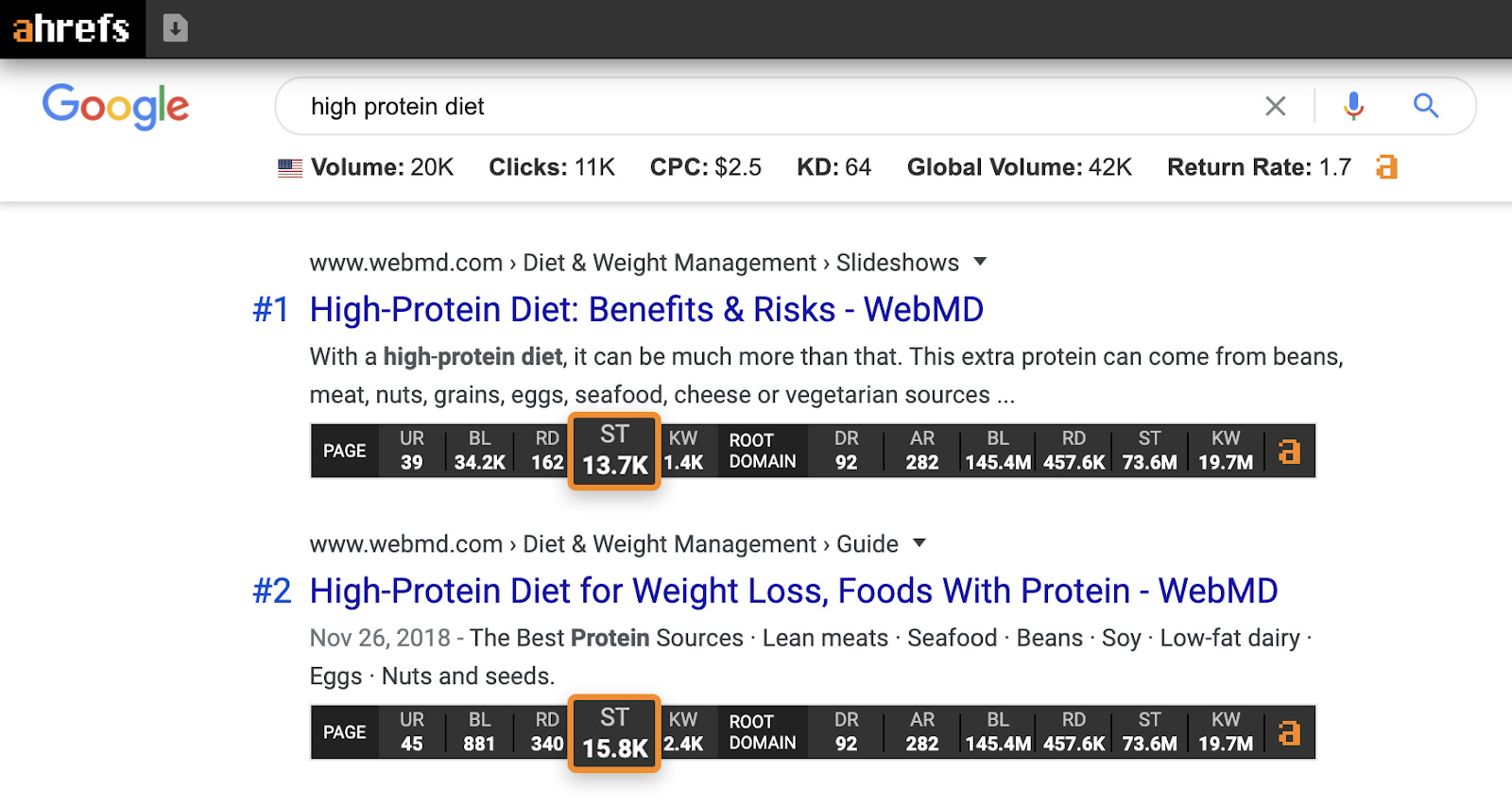
The lesson here is that it’s time to stop agonizing over first-place rankings and start focusing on traffic instead.
You can read more about how to do that here, but the basics are:
- Cover your topic in more depth.
- Build more backlinks to boost page-level “authority.”
- Nail search intent.
Given that most pages rank for hundreds or thousands of keywords, it’s hardly any wonder that some people think keyword research is dead. What’s the point of optimizing for one keyword when you’ll probably get traffic from hundreds of them?
That’s flawed logic because a keyword’s popularity usually aligns with the topic’s overall search traffic potential.
For example, take these two keywords:
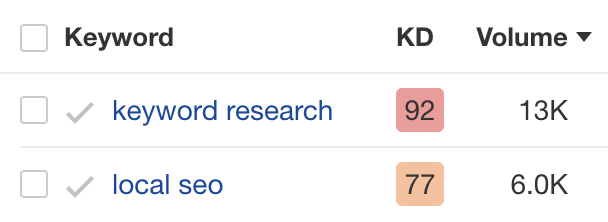
The second keyword has half the search volume of the first. And if we look at the estimated traffic to each top-ranking page, we see that the page ranking for the higher volume keyword gets way more organic traffic.
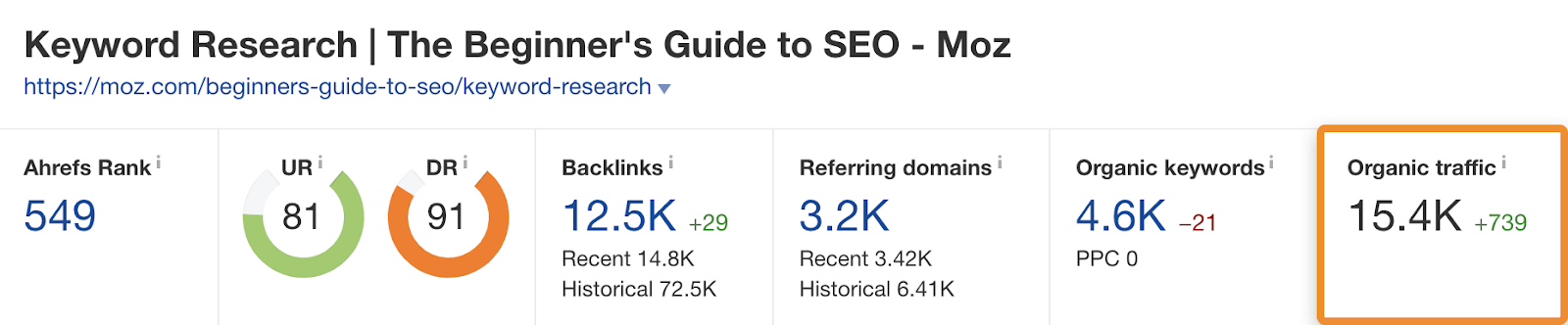
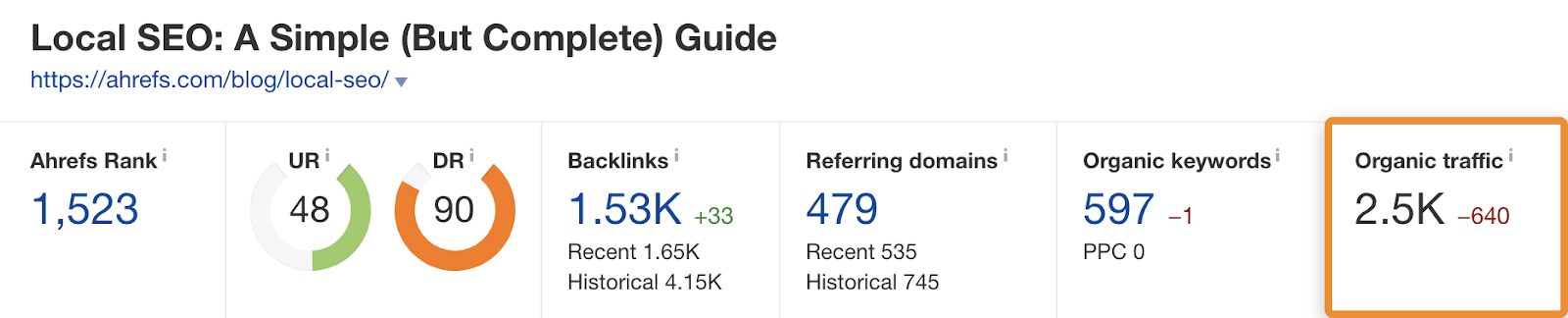
Keyword research also helps ensure that you’re optimizing for the most popular way of searching for a topic. That’s important if you want to attract the most organic traffic possible to your page.
Read our full keyword research guide to learn more about proper keyword research.
Final thoughts
Is this an extensive list of SEO myths? Far from it. These are merely some of the most common ones I come across time and time again, so it’s useful to put them to rest.
Did I miss any other frustrating myths? Ping me on Twitter.